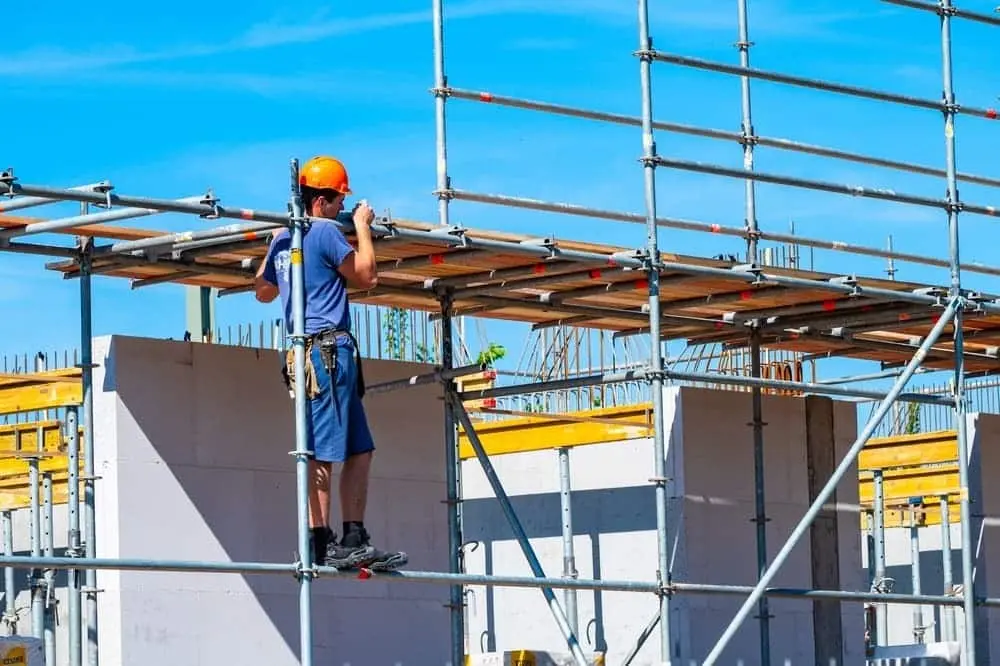
If you suffered injuries at work from a fall or got hit by an unsecured object above you, New York’s Labor Law 240 may apply to your case. Understanding your rights under Labor Law 240, also known as the “Scaffold Law,” is a helpful place to start as you evaluate your options. Below, our construction accident lawyers in New York from the Wohlgemuth Law Firm PLLC explain what you should know.
Understanding the Scaffold Law in New York
In 2024, falls accounted for 17% of all workplace fatalities. With over 300 skyscrapers in New York City, elevation-related risks on local jobsites are common.
The Scaffold Law requires contractors, property owners, and certain agents to provide proper safety devices for workers exposed to elevation-related hazards. If a party, such as a property owner, fails to meet the safety requirements defined under the Scaffold Law, and an accident leads to damages, they may be held strictly liable. This is because Labor Law 240 imposes absolute liability, which holds parties fully responsible for damages or injuries caused by their actions, regardless of fault.
Worker Protections Under the New York Scaffold Law
New York Labor Law 240 provides important legal protections for construction workers exposed to elevation-related risks on job sites. Here are the key rights that workers should be aware of:
- Protection against fall hazards: Employers and contractors may be required to provide appropriate safety devices, such as scaffolds, ladders, hoists, harnesses, and guardrails, to reduce the risk of falls from elevated work areas.
- Protection from falling objects: The law may apply when workers suffer injuries caused by unsecured tools, materials, or equipment falling from above during construction or repair work.
Who Does Labor Law 240 Protect?
Labor Law 240 generally applies to activities, including construction, demolition, renovation, repair, painting, cleaning, and building maintenance, that involve elevation-related dangers. The law is intended to protect workers who perform covered tasks at heights or beneath elevated work areas. Here are some generally covered activities:
- Building or altering a structure
- Cleaning
- Painting
- Repair work
- Demolition
- Erecting elevation equipment
Standard maintenance work may not be covered.
Stepping Outside of Workers’ Comp and Navigating Liability for Scaffold and Ladder Accidents in New York
The protections provided under Labor Law 240 do not replace what workers’ compensation provides. The two can be used together. Workers’ comp is designed to provide fast access to partial coverage for medical costs and lost wages without needing to prove fault.
This insurance bars workers from suing their direct employer. With this in mind, Labor Law 240 can provide a pathway to pursue additional compensation if an elevation-related hazard caused the accident. In such scenarios, a property owner or contractor could be held strictly liable through a third-party lawsuit.
Under New York Labor Law 240, construction accident lawsuits allow injured workers to pursue damages beyond what workers’ comp provides, such as compensation for pain and suffering or reduced earning capacity.
Are You Looking for a Labor Lawyer in New York?
Understanding your rights under New York Labor Law 240 can be confusing. View our construction accident claim guide for more information or call the Wohlgemuth Law Firm PLLC at (718) 474-9100 to schedule a consultation.
FAQs
Find more information about New York Labor Law 240 below.
What Is New York Labor Law 240?
New York Labor Law 240, often referred to as the “Scaffold Law,” is designed to protect workers from elevation-related risks by imposing absolute liability on general contractors and property owners for negligent hazards relating to scaffolding, ladders, and similar gravity-related equipment or tasks. The statute requires property owners and contractors to provide workers with adequate safety equipment and training to prevent accidents.
Does the Scaffold Law Allow You To Sue Your Employer?
The Scaffold Law generally does not allow you to sue your employer directly due to workers’ compensation protections. The statutes often allow injured workers to hold general contractors and property owners strictly liable for elevation-related hazards that cause damage.
Should I Hire a Scaffold Accident Lawyer if I Fall From a Ladder at Work?
It may be beneficial to hire an attorney with knowledge of New York’s Scaffold Law if you fell from a ladder and suffered injuries at work, as they can guide you through the process of submitting documentation for workers’ compensation on time and pursuing potential legal options, such as third-party lawsuits. These attorneys can represent your New York Labor Law 240 rights as you pursue your case.